Planning a Gutter System That Handles Atlanta's Heavy Rains
Why Gutter Planning Matters for Your Home
Water is relentless. Over time, even small amounts of rain can undermine a foundation, rot fascia boards, and erode landscaping. In a city like Atlanta, where thunderstorms can dump several inches in an hour, a well-designed gutter system is not optional - it is a basic requirement for protecting the structure you live in. Many homeowners only think about gutters when a section pulls away from the roofline or when water spills over the edge during a downpour. By then, small issues have already turned into larger ones.
Good planning begins before any metal or vinyl touches the roofline. It involves understanding how your roof collects water, where that water needs to go, and what materials will hold up under local weather conditions. The goal is a system that moves water away from the house efficiently, without overflowing, sagging, or pulling loose over time.
How a Gutter System Works
Gutters are simple in concept but require careful execution. Rain that hits the roof runs down the slope and into a trough, which is pitched slightly so water flows toward a downspout. From there, the water travels through a vertical pipe and is discharged away from the foundation. Every part of this chain depends on the others. If the pitch is too shallow, water pools and debris settles. If the downspout is too small for the roof area, the gutter overflows. If the discharge point is too close to the house, the water simply soaks back into the soil next to the foundation.
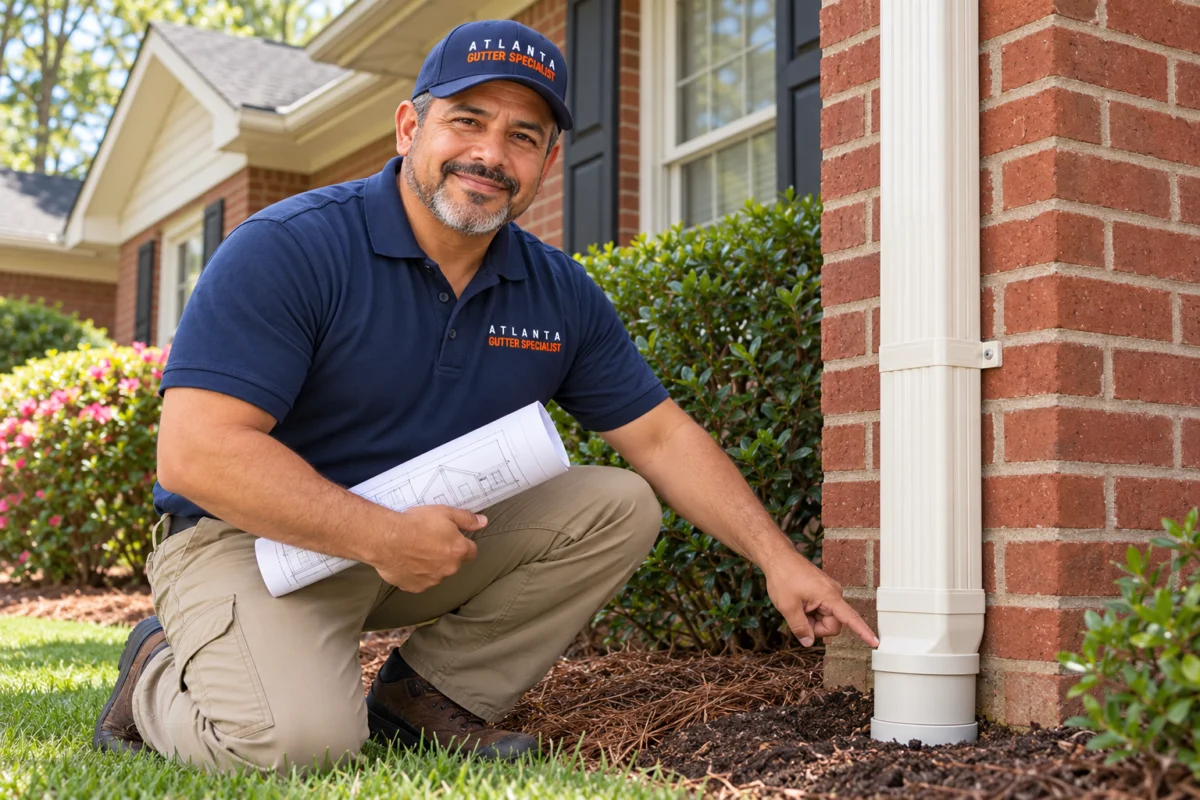
Downspout routing is a critical detail that often gets overlooked. The ideal path carries water at least several feet from the house, ideally onto a slope that directs it further away. Downspout extensions can help achieve this, especially in homes where the ground slopes toward the foundation. Without them, even a perfect gutter can leave you with a wet basement or cracked slab.
Choosing the Right Material
The material you choose affects durability, appearance, and long-term maintenance. Each option has trade-offs that matter for a home in the Southeast, where heat, humidity, and heavy rain are all factors.
Aluminum Gutters
Aluminum gutters are a popular choice for their balance of strength and corrosion resistance. They do not rust like steel, and they handle temperature changes better than some other metals. Seamless aluminum gutters, which are formed from a single coil on site, reduce the number of joints where leaks can start. That makes them a strong option for homeowners who want a clean look and fewer maintenance points. Aluminum can dent if struck, but in normal service it holds up well for decades.
Vinyl Gutters
Vinyl or PVC gutters are lightweight and easy to install, which keeps initial costs lower. They do not corrode, and they are available at most home improvement stores. However, vinyl expands and contracts more than metal, which can cause joints to separate or sections to warp in direct sun. In Atlanta's hot summers, this can be a real problem. Vinyl also becomes brittle in cold weather, though that is less of a concern in the region.
Steel Gutters
Galvanized steel gutters are strong but prone to rust once the coating wears away, especially in humid climates. They are less common in residential work now but still appear on some older homes. Paint can extend their life, but maintenance is higher than with aluminum or vinyl.
Seamless Gutters and the Pitch Factor
One of the biggest advances in residential gutters is the seamless fabrication method. Instead of buying pre-cut sections and joining them with connectors and sealant, a technician forms a continuous length of aluminum or copper on site. The result is a gutter with no joints except at the corners and downspout outlets. Fewer joints means fewer leaks, and the smooth interior allows water and debris to flow more freely.
Whether you choose seamless or sectional gutters, proper gutter pitch is essential. Gutters should slope about a quarter-inch for every ten feet toward the downspout. Too little slope and water sits, adding weight that can pull the gutter off the fascia. Too much slope and the gutter looks uneven and may cause water to overshoot the downspout. A professional installation crew will check this carefully, but as a homeowner it helps to know what to look for during an inspection.
Managing Debris and Clogs
Leaves, pine needles, and twigs are inevitable in most Atlanta yards. When they collect in gutters, they block water flow and cause overflows that can damage siding and landscaping. Leaf guards are a practical addition that keeps large debris out while allowing water to enter. They come in various styles, from foam inserts to perforated metal covers. No solution is perfect - some debris will always find its way in - but a good leaf guard can cut cleaning frequency dramatically.

Another option is to install mesh screens over the downspout openings. These catch the smaller particles that make it past the leaf guards. Combined, the two measures keep the entire system flowing freely for longer periods. Even with these protections, an annual inspection and cleaning is wise. Clogs that go unnoticed for months can cause rust, rot, and foundation issues that cost far more than a routine cleaning.
Water Diversion and Downspout Extensions
Getting water off the roof is only half the job. The other half is getting it away from the house. Water diversion strategies depend on your property's layout. If your downspouts empty onto a flat area next to the foundation, you need extensions to carry the water at least three to four feet away. For homes on slopes, the water should be directed to a point where it can flow downhill without pooling near the structure.
Downspout extensions come in rigid and flexible forms. Rigid extensions, usually made of the same material as the downspout, look cleaner and last longer. Flexible extensions are easier to route around obstacles but can be damaged by lawn equipment or sun exposure. Some homeowners bury a perforated pipe to disperse water underground, but that requires careful grading to avoid creating a soggy area that attracts termites or fungus. In heavy clay soils common in parts of Georgia, underground drainage must be planned with an outlet or a dry well, not just a hole in the ground.
When Replacement Makes More Sense Than Repair
Gutter replacement becomes necessary when the existing system has reached the end of its service life. Signs include multiple leaks at joints, rust spots that have eaten through the metal, sections that sag despite being rehung, and gutters that have pulled away from the fascia because the fasteners have corroded or the wood behind them has rotted. A full replacement is also a good time to upgrade the system. If your current gutters are undersized for your roof area, if they lack leaf guards, or if the downspout routing sends water too close to the house, replacing them gives you a chance to fix those problems.
Many homeowners consider gutter replacement at the same time as a new roof. That makes sense logistically because the roofer and the gutter installer can coordinate the work. But even if your roof is sound, replacing old gutters can protect the investment you have already made in the house. The cost of a full replacement is modest compared with the potential damage from uncontrolled water.
When planning a gutter installation, think about the whole water path from roof to ground. A system that works well in light rain may fail in a downpour if the downspouts are too few or too small. A rule of thumb is one downspout for every 600 to 800 square feet of roof area, but the actual number depends on roof pitch, local rainfall intensity, and the size of the gutters. Oversizing the downspouts slightly is rarely a mistake.

For homes with complex rooflines, multiple valleys, or large roof areas, professional layout is strongly recommended. An experienced installer can calculate the correct pitch, choose the right downspout locations, and ensure the system meets local building codes. They can also spot issues like fascia boards that need repair before the new gutters go up. A gutter installation done right the first time saves years of headaches and patchwork repairs.
Atlanta homeowners face specific challenges: heavy rain, hot summers that stress vinyl, and trees that drop leaves and needles for much of the year. A system built with aluminum gutters, proper pitch, leaf guards, and well-planned downspout routing will handle those conditions for decades. The upfront planning pays off every time a storm rolls through and the water flows exactly where it should - away from your home.